THE MODERATOR: I want to thank everybody for joining us here in beautiful south Florida, especially the folks that are on NASCAR.com and SiriusXM joining us for another incredible championship weekend.
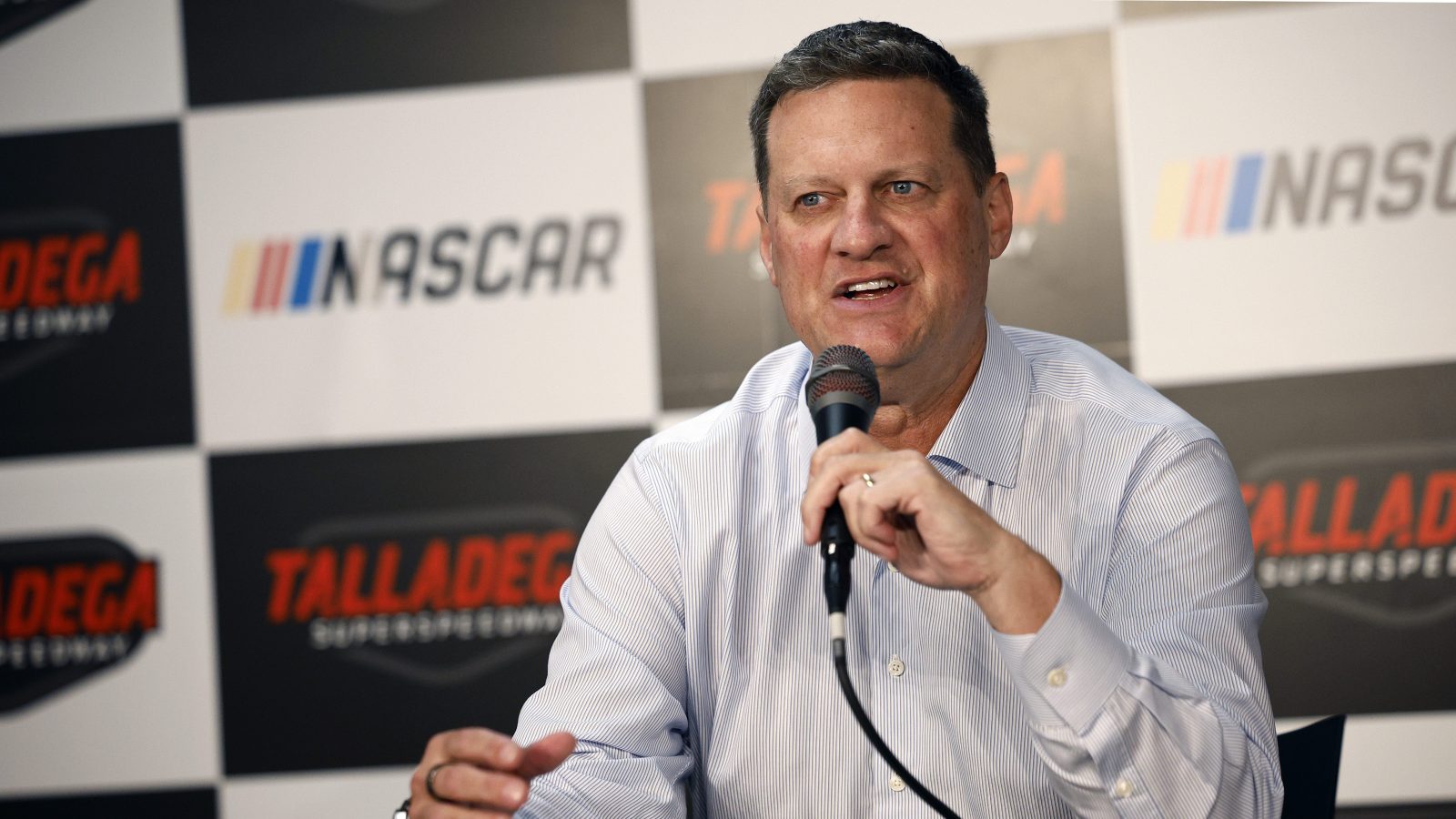
I’m here with NASCAR CEO Steve O’Donnell for our annual state of the sport address. We’ll begin with some opening remarks from Steve and then pivot to a Q & A session. We have some of our executive leadership team in the back for questions as well.
With that, I’ll hand it over to Mr. O’Donnell.
STEVE O’DONNELL: Thanks, Eric. First of all, good morning, everybody. Want to welcome the fans who may be watching on NASCAR.com or listening in. Appreciate all your support throughout the year. It’s been a fun one. Hopefully you feel the same way.
We’re certainly excited to be back at Homestead-Miami Speedway for championship weekend. I also want to thank Guillermo and the entire staff here. If you look around from the last time we were here for a championship, I think you can see the improvements, the enthusiasm; certainly ready to go and celebrate a championship and welcome the fans back to Miami for that.
I want to take a moment, too, to thank every one of our racetracks that has hosted us during the NASCAR season. Our media partners who bring the sport to the fans, and certainly all the folks in this room, we know we’re not an easy sport to cover. It’s a long season.
But I appreciate all the work that all of you have done to bring the fans closer to the sport through your articles, podcasts, whatever that may be. You’ve really leaned in.
I think it’s also important to recognize the drivers and the teams this year who have done more for the sport than I can remember in a long, long time. So it’s been a good partnership throughout the year.
Before we talk about 2026 and the future, I want to take a minute just to talk about Kyle Busch again. It’s tough to not talk about Kyle when you’re back in Miami. An extraordinary competitor, two-time champion in our sport and won the championship here, and I think he’s left a forever mark on our sport.
I said this back at Charlotte and it still stands today and it’ll stand forever really, and that’s to Samantha, Brexton and Lennix, they’re always going to be a part of the NASCAR family.
We all miss Kyle. It’s not the same without him in terms of celebrating a championship, especially how he embraced this place, but he’s going to be with us for years and years to come.
So as we talk about 2026, I would say what’s the theme, and I know I’ll get asked, what do you think, and what I would say is NASCAR has encouraging momentum, but we have work to do.
Looking back, I think there’s a lot for the entire industry to be proud of. Our teams and drivers have given us terrific competition. Fans are coming out to the racetrack. New brands are investing in the sport like never before.
It’s been a long time since you’ve seen the activation from sponsors around our teams and drivers, which is terrific.
The return of the Chase, at least in my opinion, has put the focus back where it belongs, on the performance week in and week out for the drivers. If you look at the championship media session for the Cup Series this weekend, there was one driver in there. I would say that’s successful. We looked at one driver who’s had an outstanding Chase, and that’s where the focus should be, in my opinion.
Television audience, which we all focus on as one of many factors for the sport, is consistently strong and it remains so, but it’s a focus for our entire industry and will be in the coming years. We’ve all seen the numbers, and I think it’s important to really look at where NASCAR is.
If you compared NASCAR to a new sport that’s just emerging you’d say it’s an incredible success story: Consistently large television audience, 36 straight weekends; it’s amongst the largest in sports.
But the audience can and will grow, and that’s an area of focus for all of us in the industry as we go forward.
When you talk about the audience, I think it’s important to look at the younger audience and then the continued innovation by our television partners, and that’s all of them. That’s FOX, Amazon, Skydance, USA Sports, and The CW. The success that The CW has had around our O’Reilly Series is something that we can really build on. It’s ranked as the No. 1 sports property 29 out of 32 races in 2026.
We’re also seeing encouraging growth when we talk about attendance. I don’t want to hit you with all kinds of stats, but I think it’s important to point these out as we look at the 2026 season. Admissions are up 5 percent and attendance amongst kids 12 and under is up 2 percent. So we are seeing positive trends also as you look ahead.
And Ben Kennedy and his team looking ahead to 2027, how is that trending? That’s continuing to be positive as we look at Daytona in the first quarter of the year.
I talked a little bit earlier about the expanded partnerships we have and the expanded portfolio. They’re promoting their drivers. They’re making them stars. You’re seeing them activated and that’s across all our OEM partners as well.
When we talk about our partners, I think it’s important to thank Craftsman for being our entitlement partner for the Craftsman Truck Series, but also welcoming in what we believe is going to be a terrific partner for the trucks in FedEx Freight.
The focus for us is really connecting with a new generation of fans. Tim Clark and the group and Jeff Smith created a new brand positioning that we believe is really working. How do we measure that? We measure that when we look at interest in the younger demo of 18 to 34 year olds. It’s at its highest level since 2013.
And social media impressions. We’ve done less, but we’ve had a much greater impact. In terms of less output, our impressions are up 34 percent year over year, so really big and strong numbers.
Merchandise sales are higher than they’ve been in years, and we continue to focus on gaming platforms to bring in that next generation of fans.
Content, NASCAR productions facility and partnering with different folks outside of the industry, I think we’ve got — folks have seen the AMC Thunder Road show that will launch. Everybody is familiar hopefully with Days of Thunder and the partnership with Skydance that’s coming.
We’ve got a lot of new content projects that are going to come through across various platforms, including our FAST Channel. When you look at the FAST Channel, since October of 2015 content projects, the reported view is up 35 percent. So, again, really strong indications of people engaging in the sport.
Going forward, one of the things we’re going to work with the race teams on, and you’ll hear me talk about this in future projects, is YouTube and building that strategy. It’s important for us to work together on YouTube, and doesn’t just me NASCAR. That means the drivers, teams, tracks really coming together to really embrace that platform.
Dodge, hopefully everybody saw that announcement, returning to the Cup Series in 2027 with Kaulig Racing. Another reason that we should be excited about the season.
I want to take a moment to personally thank Tim Kuniskis for having the belief in NASCAR, his entire Stellantis team, Matt Kaulig, Chris Rice, our employees John Probst who worked really hard to bring that together.
Then our partners. When I say partners, other OEMs. Chevrolet, Ford and Toyota did not have to do what they did in terms of embracing a new potential OEM, and it’s really a testament to the sport that we have three partners who wanted new OEMs, worked together to bring new OEMs, and it’s that spirit of going forward where I think we’ll attract more and more interest in the sport.
The momentum we have also is just not the United States. I think people forget sometimes that we have other series outside of the U.S.
In 2026, our Cup races aired in more than 185 countries in 25 languages. We had record-breaking attendance in our European Series events. 44,000 people show up in Czechia, and Mike Ford told me that it’s the first NASCAR reference of Czechia according to racing insights, so I wanted to hit that up for the group as well.
In Brazil, first female to win a race. Mexico, three women competing at the highest level. Then as we look ahead to Canada, we’re going to celebrate our 20th anniversary of the series as well. Excited about what’s to come in the international space.
The goal at NASCAR is ultimately create as many avenues as possible to bring fans into the sport. That will hopefully lead to someone saying, hey, I want to get to a race. What do we hope happens from there? They embrace a driver. True success is that race fan has embraced a driver and developed so much passion that they have absolute disdain for three or four other drivers out on the track.
That’s when we know we’re successful. Get them involved through whatever avenue they can, get them to embrace a driver, and then ultimately to have that passion is what NASCAR is all about.
Since becoming CEO, as we look forward to where we’re going, spent a lot of time, and I think you’ve heard this from me, out there listening, drivers, owners, OEMs, our partners, other sports leagues, media partners. And I think the good news if you talk to any one of those people is they all believe the sport has momentum. They also believe we have work to do, as do I.
I think as you look at what we can do and what that focus should be on where we’re going, I hear the fans, and it’s in making NASCAR easier to follow, and we’ve got to do a better job telling the stories about the people that are in this industry.
Too often — you know, I’ve been at NASCAR 30 plus years, and too often you assume people understand NASCAR, they know NASCAR, and it’s a big opportunity for us to reintroduce the sport.
We have a lot of momentum, but we’ve got to tell the story and introduce people to those storylines and those people.
The work has begun. The stakeholders, and every stakeholder in our industry has helped create what I would call a blueprint of where we want to go in the future. It’s going to really touch on five different pillars.
One of those is competition. We’re going to talk about audience growth and engagement.
Schedule and media strategy, international, and then our at-track fan development. The goal with all of those is simple. It’s make NASCAR better. That means a healthy ecosystem for all industry stakeholders. It means a schedule that resonates with our fans who have been with us the longest and new fans who are excited about it.
More ways to connect with our drivers, better experience for our fans who are either watching at home or attending a race for the first time or have been there for years and years.
We’ve got a leadership team that’s working across the industry. This is not just NASCAR, working across the industry to turn those priorities into action.
Our fans should be able to see the difference in the future. Is the sport easier to follow? Are we giving people more reasons to watch? Are we culturally relevant? We need to do this all while protecting what people have loved about the sport. So it’s grow the sport and really reengage with those who have been a fan for years and fears.
My responsibility as you look at it is really set the direction. I take that seriously. We need results. We can talk a lot but we need results. Hopefully you have seen that, that we’re going to move swiftly when we need to with the industry.
What I’m excited about is we’ve got an outstanding leadership team. We have hundreds of employees at NASCAR who are ready to lean in and work together with the industry and who care deeply about the sport.
But NASCAR, I think it’s important to say, it’s bigger than us. It’s bigger than the sanctioning body. It’s our teams, drivers, racetracks, manufacturers and partners. I think what I’m most excited about working with all of them is if you look at the quality of human beings that power this sport in our industry, it’s the best in any sport. Every one of those is NASCAR.
We’ve got an opportunity as an industry to come together and showcase what we’re all about to millions and millions of fans.
At the end of the day, I’m not naïve; I know our fans care about great racing. They care about the drivers. They care about the experience at the track. We want them to keep watching. We want them to come back and bring somebody new to a race as well.
I’m excited about the future, and most particularly I’m excited about our team and the folks who are going to work together because I think for the first time in a long, long time there’s alignment on where we’re going.
We do the blocking and tackling race to race really, really well. The five-year plan of where we’re going hasn’t been something we’ve focused on as an industry. That’s all changed, and we’re coming together to work together to really grow this sport.
With that, I’ll open it up for any questions.
Q. Steve, you talk about the racing. And then, this is a sport about racing. A lot of the fans seem to push back on the Next-Gen car and the quality of racing on the short tracks. What would you say to that? What efforts will be made over the off-season and in the near future to improve that, whether it’s rule changes, testing, or at some point do you look at a new car?
STEVE O’DONNELL: Yeah, what I would say to our fans is NASCAR is clearly not just Cup racing. You look at ARCA, you look at trucks, you look at the Xfinity Series and Cup. NASCAR is responsible for all those forms of racing. You can pick out one series if you want to, but we’ve got a pretty smart group of people who work on race cars in a pretty smart industry.
I’d probably start out with we always want the fans to embrace what we’re doing. But when we look at the facts, the facts say that short track racing in comparison to metrics over the last few years is at its highest level possibly from positivity from our fans.
You may have different metrics, but our metrics when we look at the fan counts and every one say we are trending in a very positive direction. Does that mean everything is great and we’ve stopped doing anything? No. I think you’ve seen us make some significant changes. We’ll continue to do that.
Every race is a focus. We’ve got 36 or 38 opportunities on the Cup level to make a difference and to showcase fans and to make them big events. We’re always looking at the car. We’re always looking to improve. That’s what we do each and every day. But I’m confident our team will continue to do that, and we’ll continue to have the best racing in the world, in my opinion.
Q. Fred Lorenzen’s brain was studied and he was diagnosed with CTE. Beyond the current safety elements in the cars today, what is NASCAR’s role, if any, in the study and treatment of CTE and brain injuries after a driver’s career has ended?
STEVE O’DONNELL: So I think it’s important to first acknowledge that we’re in a dangerous sport, right, and I think if you look at every sport, one of the top narratives would be around concussions and what is everyone doing.
This is not new to NASCAR in terms of is this the first time we’ve looked at it. We have a number of doctors that have studied this. We have partnerships with Wake Forest and other universities that have worked together. This has been a focus for us for a long, long time.
I am incredibly confident in the doctors that we have with our drivers. They strap in each and every day knowing there’s a risk, but I think also believing in the expertise we have at NASCAR that has surrounded each and every driver with the technology and how to continually get better.
So it’s a focus for us for sure. We always want everyone to be safe in a race. That’s our No. 1 focus. Look at the Riley Herbst hit. The fact that someone got out of that car afterwards is a pretty good testament.
Do we stop at that? No. John Probst and his team at the R&D Center bring that car back, they look, they speak to the driver. I’ve said this many times, Bob, safety is a never ending journey and we’re going to continue, and it is our responsibility to ensure that we put the drivers in the safest possible place.
Q. I’d like to follow up on the question about the car. Has there been any discussion of a Gen 8 car, and if so, what would be the timeline to getting a new car? If there’s not, then why do you guys remain so committed to the current car?
STEVE O’DONNELL: Well, let’s look at this industry and why we went to this car. We were on a pathway where there was very limited ownership. Teams were car manufacturers. There were no new OEMs that came into the sport. There were no conversations.
In fact, it was the opposite. If you guys don’t do anything, we’re not sure this is sustainable. So I think it’s important to go back and look at the Next-Gen car and why it was put together.
You have a different model. You have many new owners that have come into the sport. You have an ownership landscape that is much healthier than it was before. You have Dodge entering the sport. You have other OEMs who are looking at it.
You have pretty good racing. The facts when you look at those compared to other sports are pretty strong. So I think it’s important to look at what changes can you tweak along the way. But for us, we want a sustainable model for the industry.
A Gen 8 or a Next-Gen car comes with all kinds of costs and all kinds of different things, so I’m confident in our guys and the industry and the OEMs to tweak what we have where necessary, but also be pretty confident in our drivers going out there and having the ability to go win races and put on some pretty darned good competition.
Q. In the past you’ve talked about the growth aspect of highlighting rivalries between team principals, team owners as an area where NASCAR can improve. How do you realistically achieve that with an ownership group or team principals who largely operate behind the scenes unless it’s for a contract announcement or for a winner’s press conference?
STEVE O’DONNELL: Yeah, it’s a great question, and I think it’s a cultural change. The good news is I think they’re willing to do that, and it’s been something, candidly on NASCAR, that we haven’t even approach and hadn’t thought about in the past. You have a number of willing participants who want to do that, but we’ve got to show the way, right? We need to work with you all and say, what would be the best way to do that and showcase the different personalities? Is everyone going to want to do it? No.
Some people like talking here. Some people don’t. Some people like talking a little smack to others. Some people don’t.
But we have a huge industry up and down pit road, team principals, owners, new people coming into the sport that I think would be important for you all to hear their perspective on how they see it just entering the sport.
So our job during the off-season is part of that platform of talking about how do we set things up on a week-to-week basis. How do we get ahead of you so you know if we’re coming in this weekend, Jeff Dickerson is here and he’s talking to X, Y, Z owner, and that’s part of what we do.
We have work to do in that a space, but the number of personalities we have in the garage area is pretty darned cool, and we’ve got to expose them to more people outside of just kind of the day-to-day garage area.
Q. With Metro qualifying in the Chase, the waiting of previous race results seemed to produce a rich-get-richer result for the next race, particularly with the number of rainouts in the Chase this year. Is that something NASCAR will look at during the off-season? Is there a possibility of a return to owner points as the metric with all the Chase drivers placed in the final group in qualifying order? Would it make sense to do the same for the start of the race?
STEVE O’DONNELL: The short answer is yes. But I think with some context. This wasn’t new, and I think it got lost with a lot of folks. This had been put in place back in COVID, and I think everybody just didn’t see it or didn’t read it, and all of a sudden we got rain, rain, rain, and it became a big issue or a big talking point. So that is something we’ll look at.
We’re also looking at tweaking qualifying a little bit at select events as well that I think the fans will embrace. Nothing to announce today, but we’ve got some good things working in the off-season, not only about tweaking what you talked about, but some different formats we can explore as well.
Q. Steve, I was just wondering if you could evaluate the first year of the O’Reilly Auto Parts Series entitlement sponsorship?
STEVE O’DONNELL: Yeah, I think it’s a great combination of O’Reilly and The CW together. We have worked together to activate in local markets. One of the strong points of The CW is they have a lot of local owned and operated stations.
Unlike some of the folks that we deal with, they have the ability to bring in and partner with maybe some of the local stores that O’Reilly is working with, so we’re starting to see some of that activation in store. O’Reilly has been a terrific partner for us.
I was just out at The CW this week and we talked about what can we do in the future, so we’re going to bring our teams together with O’Reilly, with The CW, probably with some race teams as well, and just talk about, look, got really great momentum; what can we do now to really activate those drivers that are coming up so that name recognition is there as we get to the Cup Series, but also celebrate the racing that’s going on there?
I’d look at our version almost as college football. It is drawing really, really strong ratings. We’ve got to celebrate that. We need to tell that story better frankly on Sundays as well and get some of those fans who are viewing Sunday’s races to take a look at Saturday as well.
Q. You mentioned international. Every year we tend to talk about — I know you and Ben and Probst have gone overseas. There’s a lot of big beautiful places that we could race. Have y’all come up with something that you could even put out there as a concept for the sport going there at some point?
STEVE O’DONNELL: When you look at — I talked a little bit about five years, where do you want to go, and I want to clarify something because I threw out 2032. I made that up. That was just because of when the rights deal was going to be.
What I saw from a couple tweets yesterday every once in a while, Jeff, I do see some tweet, and it said five years. We can’t wait five years to do anything. That wasn’t at all the case. We’re moving quickly. It was purely a name of just where the new media rights cycle was going to end up.
One of the pillars that you talked about is international. We don’t want to just go somewhere for the sake of going somewhere. So we hired Adam from the UFC who headed up all their international development, and Scott Prime. So if we take a race somewhere, we want to make sure that we’re not just in and out, maybe collecting a fee for the teams in NASCAR and what have we done? Have we brought any new sponsors? OEMs? New fans?
So it’s important for us to go into a marketplace, develop some fans, be in a local market, maybe bring some drivers in, be in the bars, whatever that may be, so they understand what NASCAR is when we go over.
That work is starting, and I think the good news is there is a ton of interest. If you go to Europe especially, people love the way we race, so I think they would take the way we race versus others when you see some of the complaints at times.
When I go over to Europe they can’t wait to see NASCAR’s style of racing. So there’s opportunities there, but we want to make the right move, because ultimately it’s got to benefit everybody here as well and grow kind of that whole pie.
Q. What’s the timeline on that?
STEVE O’DONNELL: I wouldn’t put one on it, but I would say it’s not imminent. I would say the next couple years before we would do something like that.
Q. We finally saw some increase in horsepower this year at some racetracks. Has a decision been made on what direction that’s going to keep going for next year as far as are we going to see more of the same or is there a consideration of trying other racetracks as well?
STEVE O’DONNELL: Yeah, great question. Still ongoing. John would shoot me, Probst, if I committed either way. So would some of our OEM partners that are here. I think it’s certainly a topic that we’re looking at.
But as with anything, it’s not just increase horsepower and everything will be great. You’ve got to look at some other aspects. There are brake challenges, different things that go with that. So ongoing discussion, but no decisions yet for next year.
Q. I wanted to ask you about the schedule as well. Certainly San Diego was a great success this year, and I know we’re going to go back. The northwest has always been a place that has loved NASCAR. Could you talk maybe a little bit about maybe some sooner-than-later goals in the schedule and the expansion and where that might be?
STEVE O’DONNELL: Yeah, I’d say sooner than later goals, I’m putting pressure on Ben Kennedy who’s in the back. But Julie Giese, if you looked at her travel schedule the last month, I think, has been everywhere, north, west, southwest, northeast, you name it, looking at different possibilities.
Do we have anything imminent to announce today? No. But there are some really strong possibilities, especially as you look around kind of that military base concept.
Really a benefit to NASCAR where we’ve lucked out a little bit is if you look at some possibilities of where we could race similar to San Diego, it matches up in places that we potentially are not and we can attract new fans. So I’d say that’s one avenue.
Then more longer term is making sure that we’re hitting the markets that are important to grow our fan base. So in some cases, you can look at opening up those avenues through social media, YouTube, or content. In others, we may need to bring a race.
That doesn’t mean just Cup. I think with The CW, you also have the opportunity now, a number of you have been with us a long time, right, and we used to take the O’Reilly Series to a new market first. We got away from that because we had a partner who was kind of with Cup, with O’Reilly, didn’t make a lot of sense, cost a lot of money from a production standpoint.
The CW opens up some of those opportunities for us to experiment a little bit, so that’s another avenue we could look at in the future to test a market, see how it works, and go from there.
But I’m confident the team has — it’s not from a lack of interest. It’s hard to do. It doesn’t happen overnight. But there’s been a lot of work that’s already been in the developmental stages.
Q. NASCAR is such a resilient sport and I’m glad you mentioned all the great people that have for many years now working with NASCAR. Sometimes I think when the news comes out about what we call the headwinds that we’ve always heard about, we’ve always had headwinds in NASCAR, and I think the perspective isn’t always really clear. It overshadows the successes. So when we read through social media the headwinds are worse than ever. Can you put the headwinds that you mentioned in perspective? Sometimes they over shadow and it’s hard to look at the perspective of how strong they are when we read it.
STEVE O’DONNELL: Yeah, I think as an industry, we do a pretty good job of being critical of ourselves, and that’s okay because we always want to get better.
But when you get outside of kind of the NASCAR bubble, in the garage area, and you move around to some of the partners, especially when you talk to some of the media folks and folks who aren’t as close to NASCAR, the story is very different.
NASCAR has momentum, and momentum they haven’t seen before. Are there challenges? For sure. But I would say if you look at most of the metrics — I’m transparent. You all know me. But three of the four media partners we are either even or up in terms of ratings. CW, up. ARCA, up.
In the tail half of the season when we’re up against the NFL it’s a challenge. We’re going to look at that.
Now, if that was all year and if I was sitting up here and our social media metrics were down, our sponsorship was down, our attendance was down, we’d probably have a very different story, and that’s not the case. All of those are up, and that’s good. That’s something we can build off of, and we can focus in on where there are some challenges and go to work together.
I think it’s no surprise everyone in our industry recognizes it, but we recognize it as an opportunity because we are now working together as an industry talking about what should we do. What’s the art of the possibilities in terms of when we race, where we race. So a lot of opportunities to build off of. I’m confident getting up here on behalf of our whole team in the industry to say we do have momentum.
Now, we’ve got to show some results with that, not just sit back, but I think we’re going to get that done.
Q. Steve, going off of what Jordan and Jeff were asking earlier, the fan reception for the racing product in the O’Reilly Series has been tremendously positive yet again this year. There was also some talk earlier this year of the technology platform and the future of that, particularly given that the core of the current O’Reilly car that’s being used is over 15 years old. When you project ahead to the end of this decade and the beginning of the next decade, what do you think the future of the O’Reilly Series from a car, technology, chassis, et cetera, platform, what does that look like?
STEVE O’DONNELL: Yeah, I think there’s two things I’d probably touch on around the O’Reilly Series, and I would agree we love the racing in the series.
If you look — I talked to Tyler Reddick about this. I hope he doesn’t mind me putting him on blast, but he said, hey, if you put me and the top ten Cup drivers in that series, it’s going to look like Sunday as well. And it’s good racing. And so there’s a difference, right?
These are conversations that have been going on, I think, since the 1970s of, hey, how do we improve the racing? That’s the focus we always want to have.
As you look, you’ve pointed out a definite issue or opportunity as well of what do we want to race in that series going forward. John and the team are looking at where are the parts and pieces, how long can we sustain that, and then what’s the right move with whatever model we choose that can be an economical model that works for the car owners, the drivers, and ultimately helps grow the fandom.
A lot of work being done I’d say over the last two years. They’ve had conversations with the teams. No direct answer yet, but there’s a lot of work and a lot of investment candidly that’s been made into that future as well.
Q. We’re seeing fewer instances of season-long primary sponsorship in the Cup Series compared to 10, 20 years ago, and B-to-B sponsors for years seem to have grown in prevalence in NASCAR. Are you concerned those two factors might prevent fans from creating attachments to the visual identity of the sport through consistent liveries and brands that they’re attached to? Like we used to see the STP 43, Miller Lite No. 2, M&M’s 18, things like that?
STEVE O’DONNELL: Yeah, so I would be concerned if I didn’t see interest coming back in sponsorship. So I look at this more as an opportunity. So this is a discussion when you say what are making up these five pillars, how does it look. Under the competition banner and under how do we bring in new fans or even engage our current fans, that is one of the things we’ve talked about. What can you brand the cars — it’s a reality of where we are.
The good news is I think the owners are in a better position now with more stability. Does that say that sponsorship doesn’t matter anymore? Absolutely not. So we have work to do in that space.
The reality is that it’s tough for a sponsor to look at a season-long sponsorship. But knowing that, what can we do around the look and feel of a car. So there’s discussions around could a race team have certain colors. Who knows? I don’t want to commit to anything because none of that has been committed to. But those discussions are ongoing. It’s one of the things that we’ve recognized that can be an avenue for a fan to come in and say I recognize that car in that sport, or that driver, and so that is something we’re looking at for sure.
Q. Back in 2004 when we instituted the Chase, every couple of years it was fine-tuned or tweaked in one way or another. Are you satisfied with what you’ve seen with the Chase, with the return to the Chase this year, and anything that you’re looking at that might be tweaked or fine-tuned?
STEVE O’DONNELL: So I would say we’re always going to look in the off-season, but in terms of the industry getting together, talking about what we could create, what was the goal, are we going to talk about more drivers, every lap mattering in the race, and then really focusing in on drivers who are winning and who are performing at a high level; my opinion is all that has happened. Kyle Larson has gone on an historic run right now and deserves to be talked about.
I think in the past if you look at even around the O’Reilly Series when you had that one-race deal, we would have had four drivers in here and it would have been different.
So in that regard, yes, very satisfied. But want to take some time and see how it plays out over this weekend and see what happens, but at least in my discussions with the garage area and the industry, people feel like directionally it has worked. But we want to talk to the fans as well and see what feedback we get.
Q. Last week Brad Keselowski mentioned at Martinsville that the interest in the sport was increasing more so than he had seen in several years, and with the permanent charters now since the lawsuit was settled, what growth and what have you seen now that’s behind us and everything is progressing forward?
STEVE O’DONNELL: Yeah, it’s certainly better to be up here this year than last year, I would say, and particularly a different mindset and mood from folks interested in the sport.
I think Brad is exactly right. When I’m talking to folks who are interested in investing in the sport, NASCAR is a hot property. The teams have more interest than they’ve ever had before.
Now, we’ve got to balance that with where are we going, what are the metrics going to be, who are those owners as well. I love seeing a racer being able to partner with a company. I think that’s really worked.
I also love the fact that we’re able to work with folks who may have come from outside the sport, who have been in the battles in other sports who have done some TV deals or have looked at things that may be a little bit ahead of us in terms of growth, so we can rely on some of that expertise as well and have them in the room, beat up some of the things we assumed worked over the last 20 years and kind of have a little bit of an outside view.
So that’s been encouraging.
But our job now is to make sure that we have all the right people who believe in the long-term growth of the sport, but the interest is absolutely there, which is a great thing for the sport.
Q. Do you think that Homestead-Miami could be starting a new long period of hosting the championship, and are you reconsidering the idea of a rotation or have you uncovered other good options?
STEVE O’DONNELL: So too soon to tell. I would say we’re still in our discussions. I’d leave that to Ben. But we obviously like Miami because we came back here. It’s a good feel. I like driving down from Daytona. I loved Phoenix. We’ll be back here next year, but I think beyond that we’re still looking at what are the other possibilities.
With the format change, that changes some things, but ultimately I think based on what we’re looking at, you’re always going to be able to, for the most part, crown a champion.
I think it’s important to look at maybe other markets as well, but nothing in terms of where we’re at beyond next year.
Q. In the past there’s been some concerns about the volatility, particularly the lower series. I’ve seen some concerns specifically from the Craftsman Truck Series about payout structures and so on. How much conversations have you guys had about changing the payout structure in the future, and are there plans for it in general?
STEVE O’DONNELL: Yeah, I think if you look at both the Craftsman Truck Series and the O’Reilly Series, one of the great things we have going on now is the rating momentum and the interest. Outside of ratings just among fans tuning in. So there’s a solid foundation to build upon.
One of the things we have to do as an industry and more so at NASCAR is we’re probably going to put some people on those series, so we’ve always got — we have a series director for each of those series, but we need folks solely focused on that series.
If you looked at the O’Reilly Series and I ran that series myself, you’d be pretty happy, right, with where the ratings are compared to other sports. If you look at the Craftsman Truck Series, same thing.
At times we tend to think NASCAR is just Cup. We’ve got a lot more than that. We need a focused effort. Tim Clark and others are going to lead that effort with just having some people who are daily thinking about it.
We have all the assets in terms of centralized social and all that, but we need someone working with our team owners, working with our broadcast partners and the teams. Yeah, that is an ongoing project, but I think we’re building from a foundation of strength in terms of what just happened this year.
Q. A few minutes back you kind of opened the door for a standalone O’Reilly Series race as a testing market —
STEVE O’DONNELL: Did I? I’m sorry.
Q. Is that something that’s actively being discussed? And if so, could it be possibly implemented in time for say 2028?
STEVE O’DONNELL: No, I don’t want to try and break too much news here, but it’s been interesting. As you go around and you talk to different partners, particularly media partners — and I hope Brian doesn’t shoot me for this one — but one of the discussions was around your race schedule and would you ever consider a midweek race. I was talking to The CW. We tried that when we were with FOX and it didn’t really work and the reason was because they had that primetime entertainment that the rating was so high they couldn’t.
CW is working on some of that midweek, and the opportunity for maybe a midweek race is a possibility. So the light kind of goes on, oh, we should be talking about this.
Same thing with new markets around the O’Reilly Series. We don’t have that same thing with that broadcast partner has to be here. We could potentially look at a standalone event.
It’s costly for sure, so we want to make sure for the owners in the series that it really drives new viewership and everything. I think Portland, when you talk to the team owners, that was tough. But if there are other new markets that we can look at that we can’t necessarily get with Cup, I think that is something we want to look at for sure.
And I would also say looking at what format — just different things we may want to try in Cup. Historically we have introduced something across all three series and I think there’s now an openness to try some different things in an O’Reilly or in a truck, see how they work, and look to maybe then migrate that up to Cup.
Q. A lot of fans still really like to know about Fontana and ask about Fontana a lot. You still have retained the property but there’s no current plans to develop it. Is there any update you can provide on that? And why do you keep holding on to the property?
STEVE O’DONNELL: Yeah, I think we keep holding on to it because it’s an important market for us. It will be a real challenge if we could ever put a racetrack there, just candidly. But we also recognize that Southern California is an important market for us. I don’t have any update beyond that, just that it’s a focus for us to make sure in some capacity we’re there in whatever year we’re racing.
It’s an important market. There’s a ton of NASCAR fans in California, and we’ve got to make sure we’ve got somewhere to race.
Q. Does your plan to race at military bases, does that have bipartisan support, or do the results of Tuesday and potentially 2028 impact those plans?
STEVE O’DONNELL: Well, I can’t speak for the government, but I can say that our discussions beyond ’27 have been very positive, and it’s been not just with one person. It’s been broader for the entire military.
I think if you look at the partnership NASCAR has with the military, what you saw at San Diego, what you see candidly each and every race has been a partnership that has been sustained for at least my entire time at NASCAR.
I think that will continue, and we’re extremely hopeful and looking towards that continuation beyond just San Diego.
Q. I want to focus real quick, Craftsman was here with the first Truck Series and then they came back, and this transition of them leaving — they’ve done a lot for the sport. It’s bittersweet to see them go, but also with FedEx coming in, your thoughts on that and just the commitment that we’ve had from the Black & Decker, Stanley Group, and Craftsman through the years?
STEVE O’DONNELL: Yeah, I think the original Craftsman Truck Series, I would agree with you, is a fantastic partnership, did a lot for the series.
I think as we looked at what just occurred, there was a change in personnel there and a change in how they look at things. As you look at going forward, you want a partner who’s going to activate, who’s excited about the sport. Couldn’t be more excited about FedEx Freight and what they’re going to bring to the table. They’re extremely excited about how their brand and what they’re trying to do fits with NASCAR.
So I look at it more as just a really big opportunity. Certainly thank Craftsman, but I think for where we are today, FedEx Freight gives us that real opportunity that we talked about for the trucks to kind of build upon that with our TV partners and the race teams.
Q. Right now when there’s an incident on track, it seems like drivers kind of clam up. Ryan Preece had the whole Don’t Hit the Button tee shirt. I was wondering your thoughts on that, if there’s a way to maybe incentivize them to be more open about on-track drama and things like that?
STEVE O’DONNELL: Well, we have a swear jar that I know I got in trouble on, but some folks — it’s interesting because that was, I think, the most viewed and engagement we’ve had with anything we’ve done.
Ryan Preece is a guy that I talk to him a lot about this, of drivers being themselves. Our job is to encourage drivers to be themselves. We talked about sponsorship. There is a balance there. We recognize that balance.
But I think what we’re seeing is the more drivers are themselves and the more they let people in with their personality, the more they’re going to be recognized, the more fan engagement we have.
Carson Hocevar, there’s certainly some challenges, but I like what he brings to the fan base in terms of going out, meeting with fans, talking. Does he have some things to work on on track? Absolutely, and we’ve talked about that, and we all know where that stands today.
But I think if you look at licensed merchandise, engagement, fans are really hungry to embrace a driver, to find their driver, and the more drivers we can have the fans say that’s my favorite driver, the better the sport will be. We are working with them and encouraging them to do that, but that’s a long journey for sure.
Q. Since Talladega, have there been any more discussions about potential superspeedway rule changes or preseason testing before Daytona?
STEVE O’DONNELL: Yeah, great question. Good to see you as well. On our end, you look at the changes we’ve made, and this goes back to our competition group, we’ve said we’re going to move fast. I think historically at NASCAR we would have said, we’ll see in ’27 and we’ll talk about the short track package in ’28. That’s not the case. We’ve moved quickly.
From an on-track competition car, are you able to move and do some different things directionally? I think we’re comfortable with heading into Daytona with what we saw.
Now, kind of the officiating or sporting regulations, I think we are taking a look at. With technology, with AI, it’s become such a focus on fuel saving. If you ask the drivers if they ever fuel saved at Talladega 10 years ago, the answer is yes. That’s always happened. But it’s become such a focus now on what you can do and the strategy in the race.
That is the focus in terms of how does the actual race play out, not necessarily the car, but what does the race look like in terms of is it stages or whatever we may do during the race. But we don’t have plans right now to go test at Daytona.
Q. Steve, in your opening remarks you touched on the ratings and the other metrics that you guys look at. This is a fan base at least on social media that talks about ratings. Can you provide further context of what you all focus on, what you’re seeing, and then maybe how that ties into those other metrics of what you all focus on and where you see the positives and negatives?
STEVE O’DONNELL: Yeah, so ratings are certainly important, right, and I’ll back up and talk about that again. If we look at ratings, I talked about the challenge that we’re focused on, and it’s during the NFL/college football portion of the season, so that’s one, no surprise. We’ve got to focus on that.
The other partners at the beginning of the season or the other portion of the season were flat to up, so pretty good. Pretty good numbers.
Then I talked about O’Reilly. I talked about truck, all up. Younger fan base, all up. So positives on those metrics.
Then you’ve got to look at your social media engagement, are you growing on YouTube, are sponsors coming into the sport, are you top of mind as people are talking about it. All those things are up. Attendance. If I came in here today and said, oh, our attendance is matching our ratings kind of in the tail end of the season, that would be something we want to focus on. Our attendance is up.
When we look at 2027, where we’re going, those numbers are up. We’ve got to look at it all in totality. It’s all important.
Things have changed so rapidly in terms of where people are engaging in the sport, and I think our main job is yeah, we’ve got to focus on ratings, but the biggest thing I think would be a success for all of us is we’ve got to find as many avenues as possible for people to find NASCAR.
So if you’re in New York or Seattle, Washington, and you don’t have a race, what is that entry point? It may be a YouTube clip that you see that you say, this is pretty cool; what is this? I’m going to tune into that race. I’m going to find it, I’m going to then go to the race.
There’s a lot of avenues we have to focus on. Influencers, all kinds of things we can look at to grow. Those metrics that we have are up.
I’m happy to share all those with you afterwards, but I think that’s the positives, so we know we’re building off of strong foundation. But we’ve got to grow those.
Q. You’ve spoken before about a cost cap, and it seems like the league is in favor of it. It seems like there’s kind of among many team owners or some team owners encouraging signs that they want it as well. Where does that stand, and do you see that as something the sport will have over the next few years?
STEVE O’DONNELL: It’s a great question. So I would say when I think of a cost cap — not me personally. I think when NASCAR thinks of it, what’s the biggest reason you would do it? The biggest reason you would do it in my opinion would be that team valuation would go up. You’ve seen that, right, with Formula 1.
So I would expect that the teams would be absolutely for this. If you have interests that are going to come in and evaluate your team of where are you at, having a cost cap is a big deal. But there’s some debate from some of the owners of does this make sense. It’s costly to do that. It’s complicated. We’ve talked to the folks at F1 about how many accountants they have to have at a team to make this happen.
But it is true when you look across the pond at F1, it has helped from a team valuation standpoint. I don’t have anything to announce today. I will say it is part of the discussions with the teams. But I would not say that everyone is aligned in terms of it happening. But we have done a ton of work, Scott Prime does we have done a ton of work on what could happen so we could be ready, but nothing imminent.
Q. It’s been five days since you announced an OEM. When are you going to announce the next one?
STEVE O’DONNELL: Nice one. I knew that was coming. Here’s the good news is we have — through the car, through the engine cooperation, I think we’ve opened some possibilities for others to take a look at NASCAR who otherwise may not have done that.
I’ll go back to what I said in the owning. Our existing partners, Chevrolet, Toyota and Ford have been fantastic in terms of sharing information about how the sport works, being open to dialogue about where we can go.
But I’ll say this: Any new OEM that comes in — John Probst and I learned this when we went over to Australia and looked at the V-8 series about what should we do with the Next-Gen car engines, and the biggest learning was be careful what you do because if you make too many changes for a new OEM and you hurt the folks who have brought you to the dance, that’s not good.
So we want to make sure that our partners who have been with us the longest are in a good place, believe in the sport, believe in where we’re going, and embrace the new partners, but they’ve got to come in the right way and go show case it on the racetrack and compete.
But it’s going to be fun seeing what Dodge does. We’re going to be all around the globe looking at new OEMs for sure, but happy that we got a fourth. Happy to say that versus saying, well, we’re looking at it for sure.
I would just, again, say thank you to all of you for the time, for being here in Miami. Looks like we have good weather. We do have some momentum. I’ve said it before, we need to remind ourselves from time to time that we’re all pretty lucky to be in this business and hopefully have some fun as well.
This weekend not too much fun. But again, appreciate you being here, and hope everybody has a great off-season as well. Thanks, everybody.
Transcript Provided by NASCAR