The biggest mystery of this weekend’s regular-season finale wasn’t who would pull into Victory Lane at Daytona International Speedway, but instead, what the on-track product would look like in Saturday’s Coke Zero Sugar 400, after NASCAR made changes to its superspeedway aerodynamic package.
With bizarre fuel saving and gridlocked finishes drawing the ire of both fans and competitors, NASCAR looked for an answer to the problem, or at least the first step in fixing it, by reducing the height of the rear spoiler from seven to four inches (to be aligned with the intermediate package) and dropping horsepower from 510 to 465.
Now, Saturday’s regular-season finale appeared to pass the eye test, at least, with the grid-locking two-by-two racing to the finish that we’ve seen at so many superspeedway events with the seventh-generation race car being non-existent, and drivers being able to make moves and get themselves to the front of the pack from the back.
Yet, what the fans saw on television on Saturday didn’t necessarily match the experience of those in the field.
There were some drivers, like Chase Briscoe, Daniel Suarez, Shane Van Gisbergen, and (of course) Ryan Preece, who liked the aerodynamic changes that were made for Saturday’s Coke Zero Sugar 400.
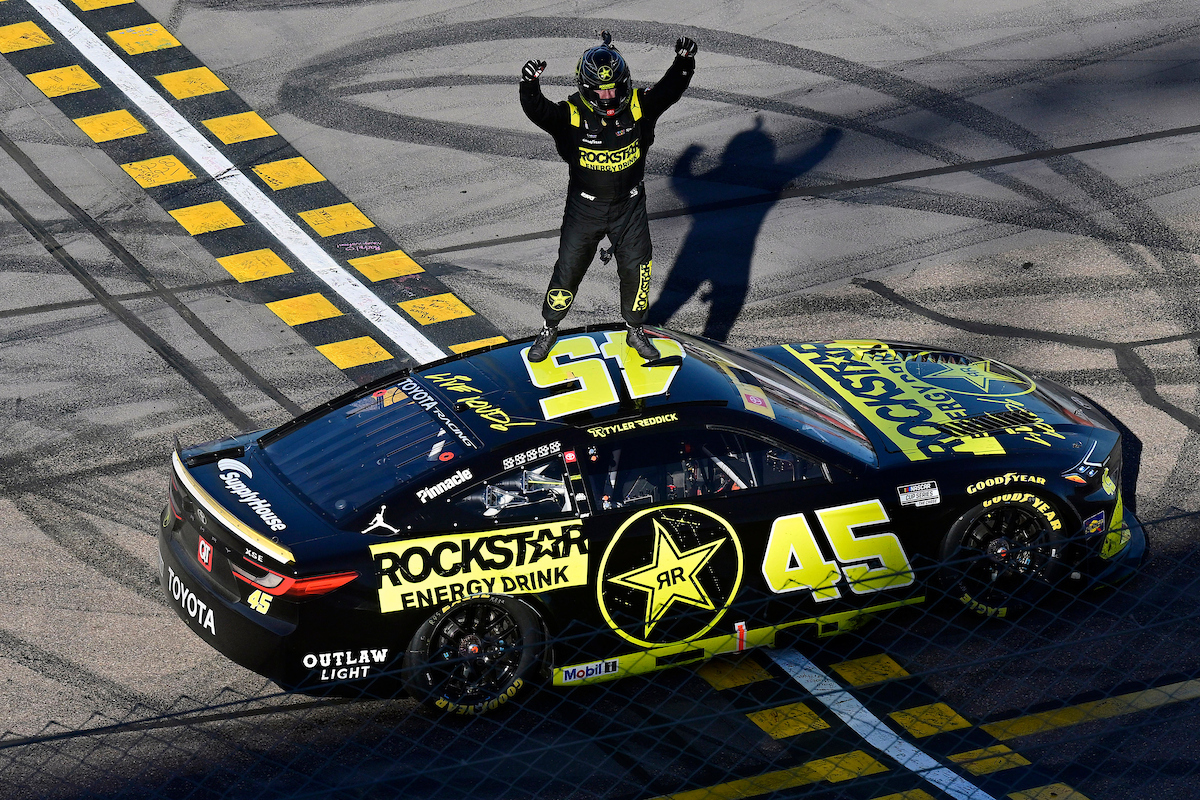
“I mean, yeah, I won. I like it,” Ryan Preece said jokingly in his post-race press conference.
“I thought it was better,” said runner-up Daniel Suarez. “I think you can make runs by yourself, and you couldn’t do that before. So, I personally thought it was a positive. I think it should come back.”
“I thought the package was way better. Who knows if there’s still more to go, but I thought compared to what we had, it was really good. You could make moves and passes,” said Chase Briscoe. “It was more traditionally how you would race here. The fuel saving was still there, but it was just how the stages wind up. […] If the stages were short enough, I think we would just run as hard as we could, and it would be really, really good.”
Shane Van Gisbergen didn’t have a ton to be happy about, being knocked out of The Chase, but was still pretty pleased with how the package raced on Saturday: “I thought it was awesome. The racing when we were flat out was really good, and the way you could move around and the cars would get kind of loose, so it was definitely more fun than previous times.”
Then, you had Christopher Bell and Erik Jones, who very much didn’t feel the same way.
“It wasn’t any different at all, which I was really disappointed in because I really bought into it, I thought it was going to be a lot different, and it didn’t play out different at all,” said Christopher Bell. “The cars drove the exact same so yeah, very perplexing. I guess it just goes to show that these things have way, way, way, way more grip than what we expected.”
“That’s the thing, we can talk about fuel saving all we want, but ultimately fuel saving or racing the cars are just gridlocked. Even with the lower downforce, we were still- there was no hole; there was no bubble to separate the cars, which meant there were no places to slide into, so, I don’t know, I expected it to be a lot different; it wasn’t different at all and it was worse with the fuel mileage and the stage lengths we had tonight.”
Jones wasn’t as blunt as Bell was, obviously, but still wasn’t satisfied with the direction the package went.
“I think [there were] a lot of unintended consequences,” said Erik Jones. “I mean, more fuel saving than ever because we took so much power away so we could just make every stage, which was kind of a bummer, and I didn’t think the racing was any better. It was just super hard to pass, and the cars just drove terrible. So, I don’t know, I don’t think there was much to gain with that. Probably have to go back to the drawing board.”
Beyond those six drivers, the reactions of those polled were mostly neutral.
NASCAR Cup Series points leader and 23XI Racing team owner Denny Hamlin definitely noticed some positive progression, but didn’t think things were dramatically different. However, most of all, the Joe Gibbs Racing driver praised NASCAR for being willing to try something new.
“I think it was a little different. Was it dramatically different? No, but I thought that the racing itself felt different,” said Hamlin. “I didn’t feel as locked into one lane as what I had in races past; I didn’t feel like it was logjammed three-by-three where you couldn’t go anywhere. It seemed like we could run three-wide for about 12 laps and then handling became a factor, and guys couldn’t hold the bottom as well, you definitely didn’t want to be in the middle, so it definitely made you make choices when it came to car handling and how much setup you put into these things to make the car go fast but I was overall happy with the changes that NASCAR made and hopefully this is a direction to go.”
Bubba Wallace, Hamlin’s driver at 23XI Racing, also noticed some differences, but described the new package as “okay”.
“It was okay. It was definitely a loss of a little bit of rear downforce; you could feel that, so you just had to be easier with your inputs, but it kinda played out the same, just saving fuel and riding around at quarter-percent throttle. I thought the runs could get a little bigger and you could make some passes. It kind of felt like the Gen6 car, so, yeah,” Wallace explained.”
As for guys like William Byron, Joey Logano, and Brad Keselowski, they didn’t notice much of a difference.
“It wasn’t as different as I thought it would be. I mean sure, I had fun, but it still, like, handling came in a little bit, but not as much as I think everyone was hopeful for more,” Joey Logano said. “I think maybe go more.”
“I’m not sure, I mean the cars handled differently but it still had similar characteristics. I just think the underwing creates so much drag on these cars; I don’t know, it just felt like it didn’t have a lot of power either,” Byron said.
It was different, but I think you give everyone a couple of races to work on it and kind of tune the cars to it, maybe it’s better. But at the moment, it wasn’t much different to be honest with you.
“Honestly, I could not tell a difference,” Keselowski told the media during his winning owner’s press conference. “I couldn’t tell they changed the rules at all. My car drove almost identical to what it did. I was really shocked by that. I thought it would drive poorly, particularly here in the summer – I still call this a summer race. I was a bit caught off guard by that. I don’t expect it to look much differently at Talladega.”
“The car was pretty forgiving. Maybe a little bit harder to build a run to push. It was not dramatic. The handling, I think we all thought handling would be a bigger factor than it was; it didn’t really come into play.”
It’s hard to say exactly what NASCAR will do next. This package is scheduled to run at Talladega Superspeedway in October, but NASCAR left the option open to a pre-season testing session to improve on the package. It’s unclear if NASCAR will keep that on the books after mixed reviews from Saturday.